
The Evolution And Effect Of Bitcoin Miners On The Cryptocurrency Environment
The Evolution and Impact of Bitcoin Miners on the Cryptocurrency Ecosystem
Introduction
Bitcoin miners play a pivotal role in the functioning and security of the Bitcoin network. As the backbone of the decentralized cryptocurrency system, miners validate transactions, More Information and facts secure the network, and introduce new bitcoins into circulation. Over the years, the process of Bitcoin mining has evolved significantly, from individuals mining on personal computers to large-scale industrial operations utilizing specialized hardware. This article explores the evolution of Bitcoin miners, their impact on the cryptocurrency ecosystem, and the challenges they face in an increasingly competitive environment.
The Role of Bitcoin Miners
Bitcoin miners are responsible for maintaining the integrity of the blockchain, the public ledger that records all Bitcoin transactions. Miners compete to solve complex mathematical puzzles using computational power, a process known as proof-of-work (PoW). The first miner to solve the puzzle gets to add a new block of transactions to the blockchain and is rewarded with newly minted bitcoins and transaction fees. This process not only secures the network but also ensures that transactions are verified and immutable.
Mining serves two primary purposes: it decentralizes the control of the currency, preventing any single entity from manipulating the system, and it incentivizes participants to contribute computational resources to the network. Without miners, the Bitcoin network would be vulnerable to attacks and unable to function as a trustless, peer-to-peer system.
The Evolution of Bitcoin Mining
In the early days of Bitcoin, mining could be done using standard central processing units (CPUs) on personal computers. However, as the network grew and the difficulty of mining increased, miners began to use graphics processing units (GPUs), which offered better performance for the PoW algorithm. This marked the first major shift in mining technology.
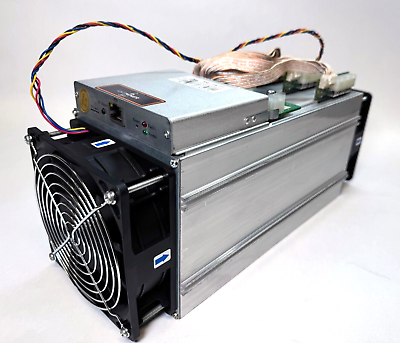
The next significant evolution came with the introduction of application-specific integrated circuits (ASICs). These devices are specifically designed for Bitcoin mining and offer unparalleled efficiency and speed compared to CPUs and GPUs. ASICs revolutionized the mining industry, making it possible for miners to achieve higher hash rates while consuming less energy. However, their high cost and rapid obsolescence created barriers to entry for individual miners, leading to the rise of large-scale mining operations.
Today, Bitcoin mining is dominated by industrial-scale farms located in regions with cheap crypto Miner 2025 electricity and favorable climates. These farms house thousands of ASICs, often organized in warehouses with advanced cooling systems to manage the heat generated by the hardware. The concentration of mining power in certain geographic areas has raised concerns about centralization and the environmental impact of Bitcoin mining.
The Economic and Environmental Impact of Bitcoin Mining
Bitcoin mining has become a lucrative industry, with miners earning billions of dollars in block rewards and transaction fees annually. However, the profitability of mining is highly dependent on factors such as Bitcoin's price, mining difficulty, and electricity costs. Miners must constantly upgrade their hardware to stay competitive, leading to significant capital expenditures.
The environmental impact of Bitcoin mining has also come under scrutiny. The PoW consensus mechanism requires vast amounts of computational power, which translates to high energy consumption. According to some estimates, the Bitcoin network consumes more electricity than entire countries. Critics argue that this energy usage is unsustainable, especially when a significant portion of it comes from non-renewable sources.
In response, some miners are transitioning to renewable energy sources, such as hydroelectric, solar, and wind power. Additionally, there is growing interest in alternative consensus mechanisms, such as proof-of-stake (PoS), which consume far less energy. However, PoS systems have their own trade-offs, and Bitcoin's reliance on PoW remains a defining feature of its security model.
Challenges Facing Bitcoin Miners
Bitcoin miners face several challenges, including regulatory uncertainty, hardware obsolescence, and market volatility. Governments around the world are still grappling with how to regulate cryptocurrencies, and mining operations are often subject to changing policies. For example, China's crackdown on Bitcoin mining in 2021 forced many miners to relocate to other countries, disrupting the global mining landscape.
Hardware obsolescence is another significant challenge. ASICs become less efficient as newer, more powerful models are released, forcing miners to continually reinvest in equipment. This creates a cycle of high operational costs, particularly for smaller miners who may struggle to keep up with industrial-scale competitors.
Market volatility also poses a risk to miners. The price of Bitcoin can fluctuate dramatically, affecting the profitability of mining operations. During bear markets, some miners may be forced to shut down their operations if the cost of mining exceeds the value of the rewards.
The Future of Bitcoin Mining
Despite these challenges, Bitcoin mining is likely to remain a critical component of the cryptocurrency ecosystem. Innovations in hardware efficiency, renewable energy integration, and regulatory frameworks could help address some of the current issues. For example, the development of more energy-efficient ASICs or the adoption of carbon-neutral mining practices could mitigate environmental concerns.
 Moreover, the decentralization of mining operations is a key area of focus. Efforts to distribute mining power more evenly across the globe could enhance the resilience and security of the Bitcoin network. Some projects are exploring ways to make mining more accessible to individuals, such as through pooled mining or cloud-based solutions.
Conclusion
Bitcoin miners are the unsung heroes of the cryptocurrency world, ensuring the security and functionality of the Bitcoin network. From humble beginnings with CPU mining to the industrial-scale operations of today, the evolution of mining reflects the growth and maturation of the Bitcoin ecosystem. While challenges such as energy consumption and centralization remain, the ongoing innovation in mining technology and practices offers hope for a more sustainable and decentralized future. As Bitcoin continues to gain mainstream adoption, the role of miners will remain indispensable in shaping the future of digital currency.
Moreover, the decentralization of mining operations is a key area of focus. Efforts to distribute mining power more evenly across the globe could enhance the resilience and security of the Bitcoin network. Some projects are exploring ways to make mining more accessible to individuals, such as through pooled mining or cloud-based solutions.
Conclusion
Bitcoin miners are the unsung heroes of the cryptocurrency world, ensuring the security and functionality of the Bitcoin network. From humble beginnings with CPU mining to the industrial-scale operations of today, the evolution of mining reflects the growth and maturation of the Bitcoin ecosystem. While challenges such as energy consumption and centralization remain, the ongoing innovation in mining technology and practices offers hope for a more sustainable and decentralized future. As Bitcoin continues to gain mainstream adoption, the role of miners will remain indispensable in shaping the future of digital currency.
Moreover, the decentralization of mining operations is a key area of focus. Efforts to distribute mining power more evenly across the globe could enhance the resilience and security of the Bitcoin network. Some projects are exploring ways to make mining more accessible to individuals, such as through pooled mining or cloud-based solutions.
Conclusion
Bitcoin miners are the unsung heroes of the cryptocurrency world, ensuring the security and functionality of the Bitcoin network. From humble beginnings with CPU mining to the industrial-scale operations of today, the evolution of mining reflects the growth and maturation of the Bitcoin ecosystem. While challenges such as energy consumption and centralization remain, the ongoing innovation in mining technology and practices offers hope for a more sustainable and decentralized future. As Bitcoin continues to gain mainstream adoption, the role of miners will remain indispensable in shaping the future of digital currency.
0 просмотров